The years of the First World War (1914-1918) spawned what is perhaps the richest period of art history in the 20th century. Why is it so important? Because the European avant-garde exploded with an unprecedented political immediacy in response to the senseless carnage of the world’s first fully industrialized war.
Italian Futurism
Futurism is marked by an obsession with the dynamics of movement and speed and expresses an unrelenting charge towards a world dominated by the machine.
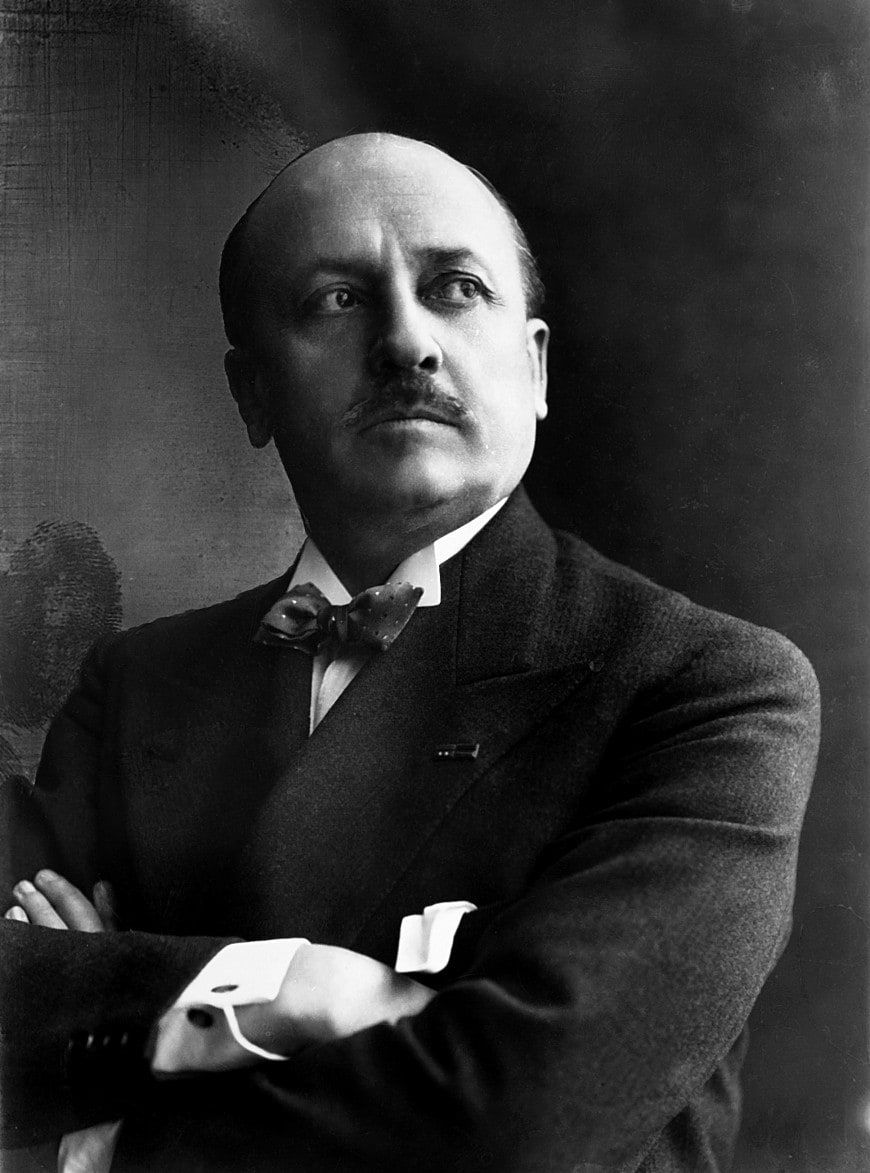
Filippo Tommaso Marinetti (1876-1944), a poet, wrote the first Futurist Manifesto published in La gazzetta dell’Emilia on February 5, 1909, and later in Le Figaro in Paris on February 20th, 1909, as a call to a revolution in art and poetry that was nothing less than violent.
“We intend to sing the love of danger, the habit of energy, and fearlessness.”
–Filippo Tommaso Marinetti
Marinetti brought much controversy to Futurism, due to his veneration of fascism and his somewhat outrageous platitudes. He writes,
“We will glorify war–the world’s only hygiene–militarism, patriotism, the destructive gestures of freedom-bringers, beautiful ideas worth dying for, and scorn for women.” (?!)
But Marinetti was a poet. What did Futurism look like?
“The gesture which we would reproduce on canvas shall no longer be a fixed moment in universal dynamism, but the dynamic sensation itself.”
–Umberto Boccioni
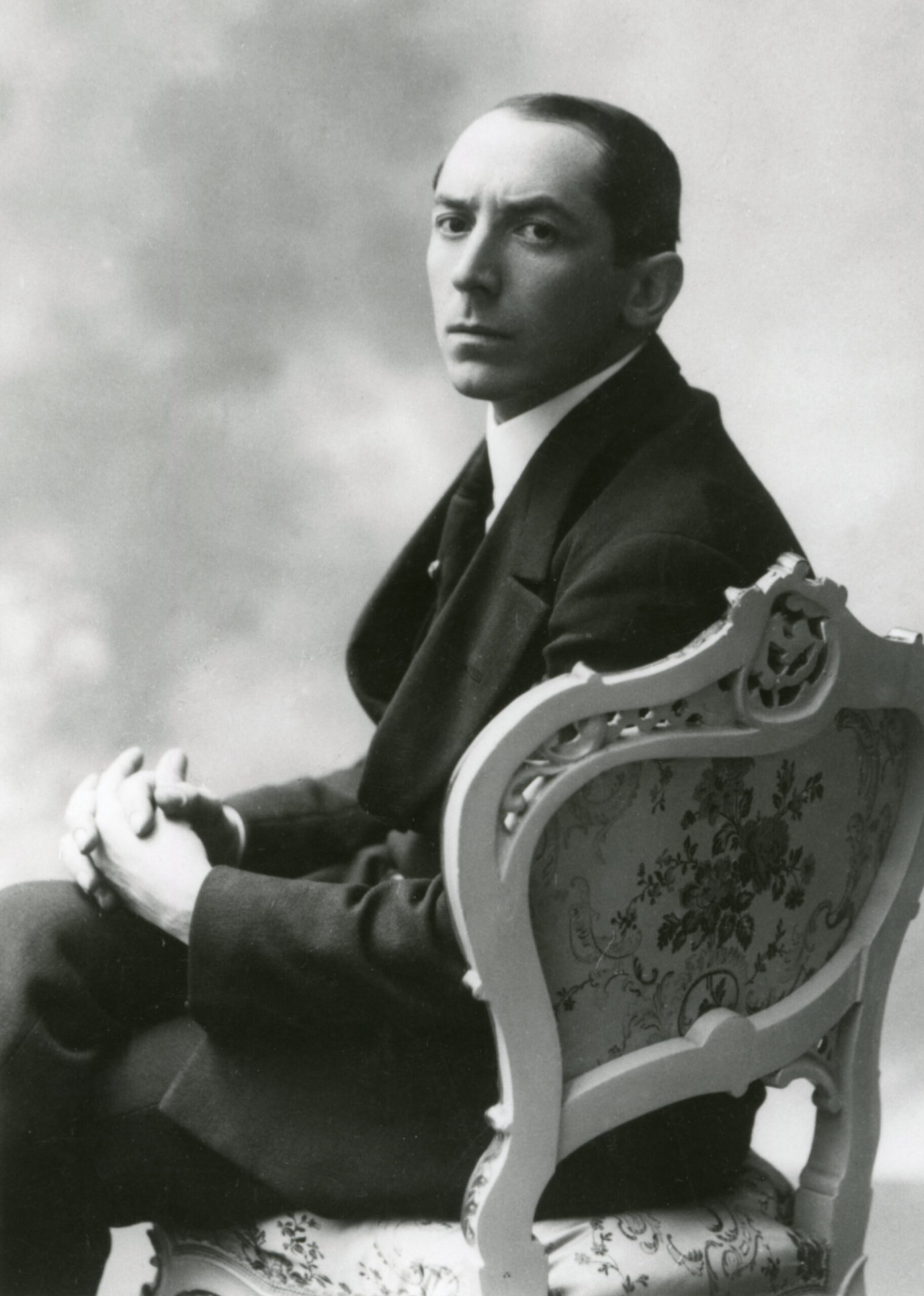
Umberto Boccioni (1882-1916) was charged with bringing the Futurist ideals to life in visual art. His Futurist Painting: Technical Manifesto was published as a leaflet in Milan on April 11th, 1910. In it he writes,
“[We declare] That all subjects previously used must be swept aside in order to express our whirling life of steel, of pride, of fever and of speed.”
This manifesto was signed by other futurists, Giacomo Balla, Gini Severini and Luigi Rossolo–who, as a composer in addition to a painter, brought the Futurist movement into the field of experimental music as well with his Intonarumori – “machines that scream.”
A Futurist philosophy is steeped in early 20th century technology. In it, speed is celebrated for its power to condense space and time. Futurism burned with the excitement of transportation technologies such as the automobile and of communication innovations of the telegraph and radio.
This preparatory sketch shows the abstraction process for Boccioni’s painting Dynamism of a Cyclist (1913)
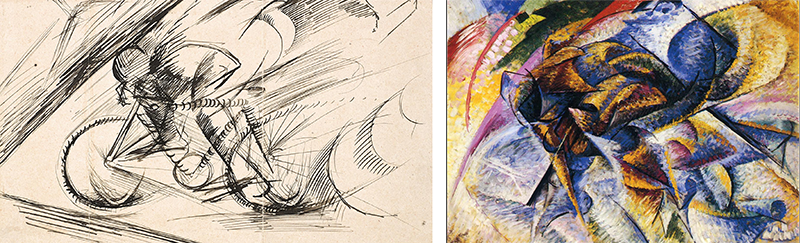
Let’s take a closer look:
Level 1 – subject matter: a bicycle in motion–vehicles were a favorite subject matter of Futurist artists, especially cyclists because of their proximity to the human body, the body as a machine extended from another machine (others include Natalia Goncharova’s ‘Cyclist’ also from 1913, and Mario Sirono’s ‘New Man’ of 1918).
Level 2 – composition: geometry of bold directional shapes and colliding planes–the result is a choreographed eye movement
Level 3 – texture: pen stroke, brush stroke–frenetic, frantic movement of the hand, creates the tension of movement, vibration
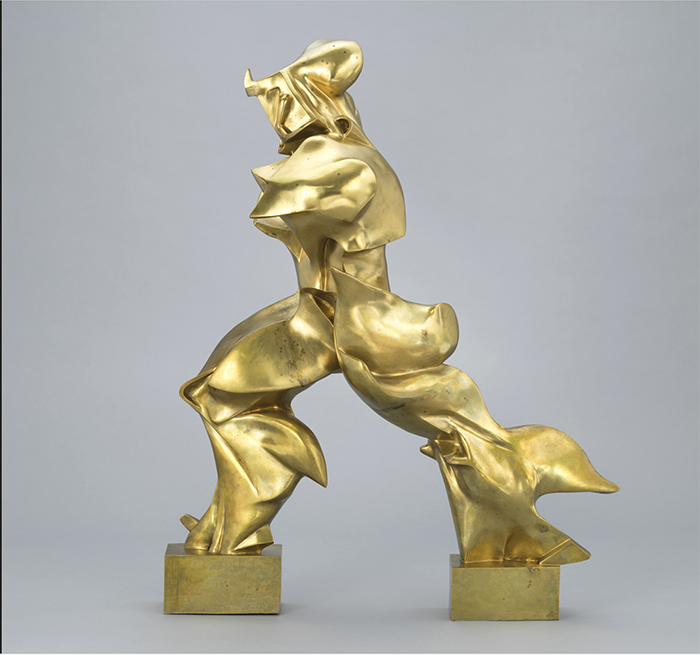
That same year, Boccioni went on to create the sculpture Unique Forms of Continuity in Space (1913) A substantial concretization of Futurism as an approach to the human form. In it, a figure strides forward with the motion of its limbs and body tracking through space sealed into the form of the figure itself. Boccioni writes:
“Let us fling open the figure and let it incorporate within itself whatever may surround it.”
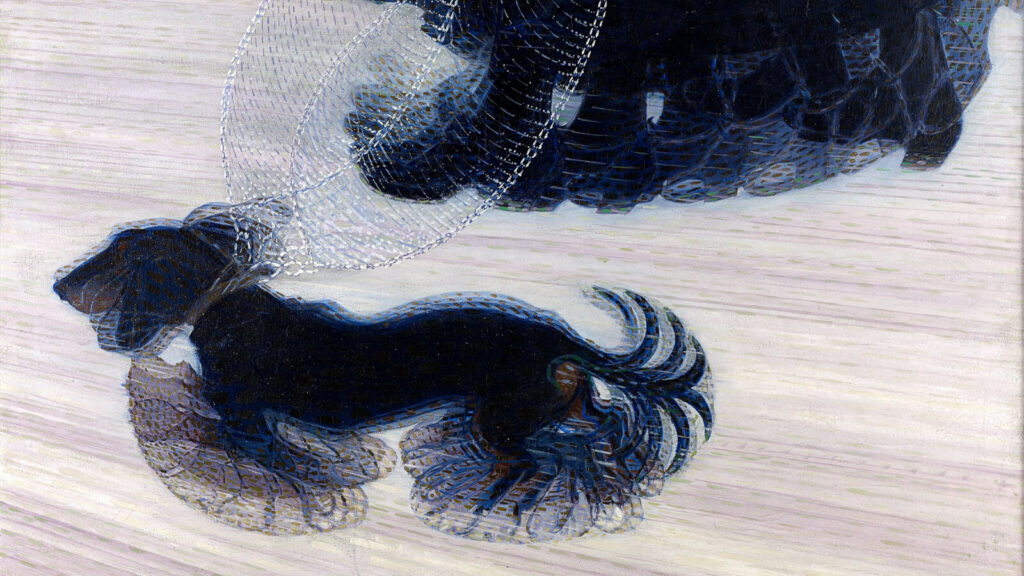
A year earlier fellow Futurist, Giacomo Balla’s (1871-1958) Dynamism of a Dog on a Leash (1912) helps illustrate a principle in Boccioni’s manifesto:
“On account of the persistency of an image upon the retina, moving objects constantly multiply themselves; their form changes like rapid vibrations, in their mad career. Thus, a running horse has not four legs, but twenty…”
On August 17, 1916, Umberto Boccioni was trampled to death when he fell off his horse during a cavalry training exercise while in service of the Italian Army during the First World War. He was 33 years old. As the godfather of Futurist art, many believe that the spirit of the movement died with him.